6 Dog Heatstroke Symptoms to Watch For
Dog heatstroke is a life-threatening emergency that can develop in minutes, and knowing the symptoms could save your dog’s life. Heatstroke in dogs occurs when the body’s temperature rises to dangerous levels that the dog can no longer regulate on its own, causing rapid damage to organs and tissues. At Animal Family Veterinary Care Center in Davenport, Iowa, we want every dog owner in the Quad Cities area to recognize the warning signs so they can act fast when it matters most.
What Is Heatstroke in Dogs?
Heatstroke, also called hyperthermia, occurs when a dog’s core body temperature rises above 104°F. A normal dog body temperature ranges between 101°F and 102.5°F. At temperatures above 106°F, severe and potentially irreversible damage to the brain, kidneys, liver, and blood clotting system can occur. Unlike humans, dogs can only cool themselves through panting and limited sweating through their paw pads, which makes them far more vulnerable to overheating in hot and humid conditions.
Which Dogs Are Most at Risk for Heatstroke?
Any dog can develop heatstroke, but some dogs are at higher risk than others. Dog owners should be especially vigilant if their pet falls into one of these categories:
- Brachycephalic breeds like Bulldogs, Pugs, and French Bulldogs have restricted airways that make panting less effective
- Senior dogs and puppies have less efficient thermoregulation than healthy adult dogs
- Overweight dogs generate more body heat and cool down more slowly
- Dogs with thick or double coats retain heat more easily
- Dogs with heart or respiratory conditions that impair their ability to pant effectively
- Dogs who are overexerted through vigorous exercise in hot or humid weather
6 Dog Heatstroke Symptoms to Watch For
Dog heatstroke symptoms can escalate quickly from mild distress to a full medical crisis. Here are the six key warning signs that your dog may be experiencing heatstroke.
Excessive, Heavy Panting
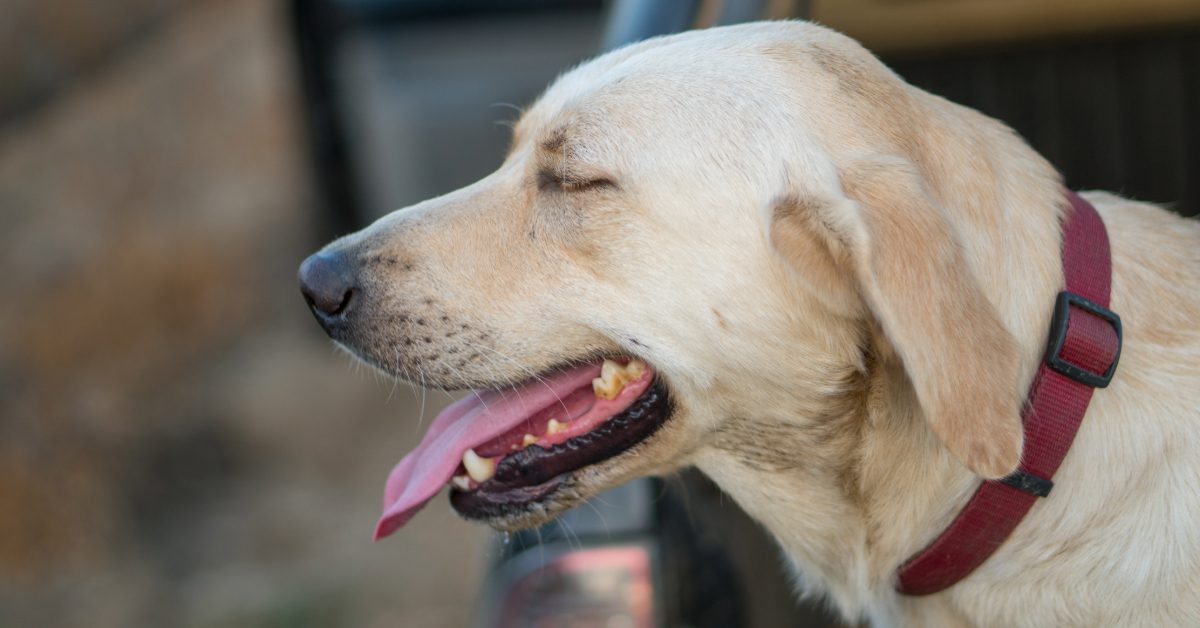
All dogs pant. It’s how they cool down. But heatstroke panting is different. It’s louder, faster, and more desperate than normal panting after exercise. The dog may appear to be struggling to breathe, with their tongue fully extended and their sides heaving. If your dog is panting heavily and the heat or exertion is obvious, this is a critical early warning sign of overheating in dogs.
Drooling and Thick, Ropy Saliva
As the body becomes stressed from heat, salivary glands go into overdrive. A dog experiencing heatstroke often produces large amounts of thick, ropy, or stringy saliva rather than the normal thin drool you might see after vigorous play. This type of drooling, combined with other symptoms, signals that your dog’s body is under extreme thermal stress.
Bright Red Gums and Tongue
Check your dog’s gum color. Healthy gums are pink and moist. In the early stages of heatstroke in dogs, the gums often appear bright red due to increased blood flow to the skin as the body attempts to dissipate heat. As heatstroke progresses and the circulatory system becomes overwhelmed, gums may turn pale, gray, or blue, a sign of shock and a true emergency.
Lethargy, Weakness, and Collapse
A dog with heatstroke may suddenly become very weak, wobbly, or unable to stand. They may stagger, drag their limbs, or simply lie down and refuse to move. Muscle weakness in dogs during overheating is the result of the nervous system and muscles being starved of adequate oxygen and overwhelmed by heat. Collapse is a critical sign requiring immediate emergency veterinary care.
Vomiting and Diarrhea
Heatstroke causes damage to the gastrointestinal tract, and vomiting or diarrhea, sometimes bloody, can result. If your dog vomits during what appears to be a heat-related episode, don’t wait. This is a sign that internal organs are being affected and emergency veterinary treatment is urgently needed.
Disorientation, Seizures, or Loss of Consciousness
In severe heatstroke, the brain is directly affected. Dogs may appear confused, glassy-eyed, or unresponsive to their name. Some dogs experience seizures as a result of elevated body temperature and brain swelling. Loss of consciousness is a sign of multi-organ failure. If your dog reaches this stage, it is a life-or-death emergency. Get to an emergency veterinary clinic immediately.
What Should I Do If My Dog Shows Signs of Heatstroke?
If you suspect your dog has heatstroke, take action immediately. Move your dog out of the heat and into a cool, shaded, or air-conditioned environment. Then contact Animal Family Veterinary Care Center or the nearest emergency veterinary clinic right away. Do not try to manage heatstroke at home beyond moving the dog to a cool location. Veterinary intervention is essential for proper assessment and treatment.
Time is critical with heatstroke in dogs. The longer the body remains at a dangerously high temperature, the greater the risk of irreversible organ damage. Our veterinary team will assess your dog’s temperature, stabilize their condition, and provide the fluid support and monitoring needed to give them the best possible outcome.
How to Prevent Dog Heatstroke This Summer
Heatstroke is largely preventable. With Iowa summers bringing heat and humidity together, now is the time to build habits that protect your dog from overheating.
- Never leave your dog in a parked car. Temperatures inside a vehicle can rise to dangerous levels within minutes, even on mild days.
- Limit outdoor exercise to cooler hours. Walk and play early in the morning or after sunset when temperatures drop.
- Provide unlimited access to fresh water. Hydration is one of the most important factors in preventing heat-related illness in dogs.
- Create shaded rest areas. If your dog spends time outdoors, always ensure there is shade available and that they can retreat from direct sun.
- Know your dog’s limits. High-risk dogs such as flat-faced breeds, seniors, overweight dogs need extra supervision and shorter outdoor exposure on warm days.
When to Take Your Dog to the Emergency Vet for Heatstroke
Any time your dog shows more than one heatstroke symptom, that’s your signal to seek veterinary care immediately. Don’t wait to see if they improve. Call Animal Family Veterinary Care Center in Davenport at (563) 391-9522 or your nearest emergency veterinary clinic without delay. Early intervention significantly improves outcomes for dogs with heatstroke. Our team is here for your dog and for you when it matters most.
Recent Posts
About Us
Animal Family Veterinary Care offers an extensive range of services all in one place, so we can meet your pet’s needs in almost every situation. Our veterinarians in Davenport treat dogs and cats because every pet is unique and important.